Identity At Work, Identity At Stake
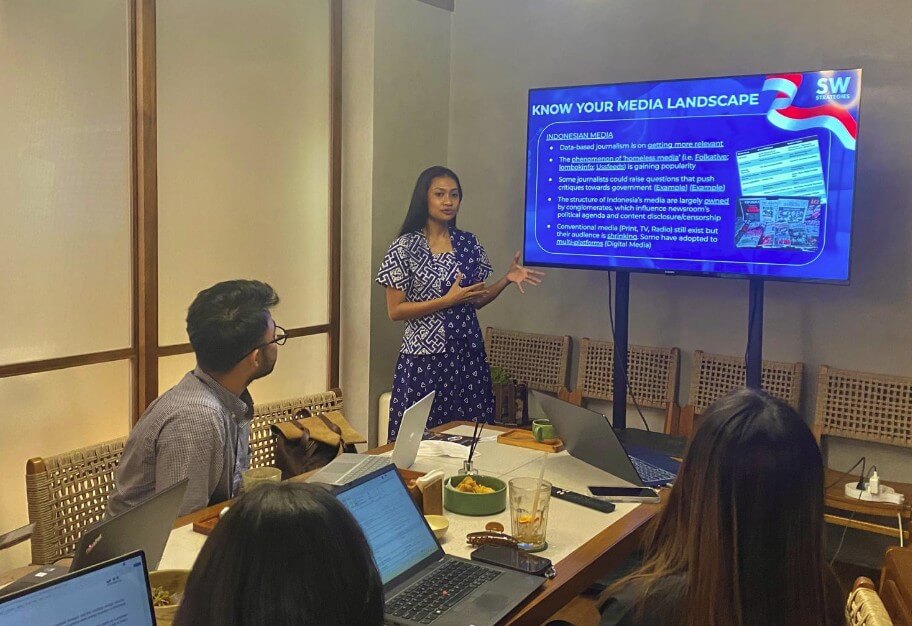
It’s now April 2026.
Soon, I’ll mark two full earth rotations of my growing and learning with SW Strategies.
Two years of navigating calls across time zones, observing different markets, and slowly understanding what this profession actually asks from me.
Sometimes I think back to 2020, when the COVID-19 pandemic froze the world and I was just a university student trying to understand why public communication felt so messy, and how its messaging shaped fear, trust, confusion, and sometimes even hope.
I remember how overwhelming it felt. Every press conference. Every update. Every shift in policy. And I kept thinking about the unseen side of it. The meetings. The drafts. The arguments. The pressure.
Back then, I was only watching from the outside.
Now, after a few years into my professional journey as a Communications Strategist, I’m inside the room. And it feels very different from the outside.
Recently, I decided to challenge myself in a new way. I took on preparing a Crisis Communication Management protocol for one of our retainer clients.
Actually, I’ve been waiting for this opportunity.
Back then, my understanding was surface level. I could observe. I could critique. I could question.
Now, being inside professional communications, and stepping into crisis management, things are unfolding in ways I couldn’t have imagined.
And I mean that in a good way.
WHEN A SMALL INCIDENT DOESN’T STAY SMALL
While I was thinking about a topic to write for this reflection, something was unfolding on X.
It started with a Day6 concert in Malaysia. A few South Korean attendees broke a venue rule and got removed. That should’ve been the end of it.
Only, it wasn’t.
Somehow it spilled online. And then it just… kept growing.
The hashtag #SEAblings appeared. What was initially about rules turned into conversations about respect. Then it turned into regional pride.
Then it turned into people picking sides.
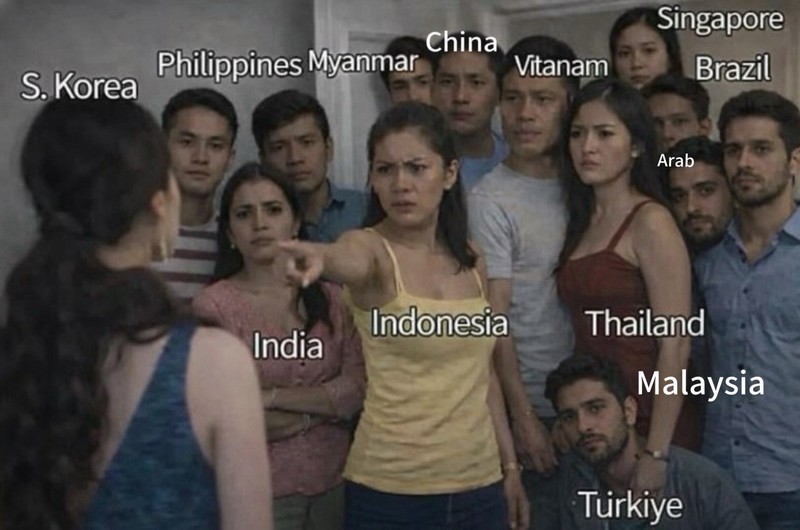
I found myself refreshing the timeline not because of the drama, but because I was watching the pattern.
For me, it didn’t feel like individuals arguing, but more like groups assembling. And by group, in this case, a region.
The “war” escalated quickly, and uncontrollable. Everyone had different things to say to add to the fuel. And the cycle kept feeding itself until around a week later or so.
Southeast Asians defending Southeast Asia.
Fans defending fandom culture.
People speaking not just for themselves, but for something bigger.
And a thought popped into my head,, this is identity at work.
INSIDE THE PATTERN
Deep diving into crisis communication has slowly changed the way I look at moments like this.
A few years ago, I probably would’ve just watched the debate unfold like everyone else. Maybe I would’ve picked a side, or even laughed at the memes and just moved on.
But this time, I found myself asking different questions: Organisations often focus on operational triggers like What hat rule was broken? What went wrong? What caused this rapid escalation? Is there anything to be clarified or reacted from our side, if so, how?
But apart from that, I think it’s important to evaluate other elements at play.
Working on crisis communication has further strengthened my understanding that audiences are not just data points or media lists.
They represent communities shaped by shared identity, pride, and emotions. And when those elements are involved, the nuance of a crisis changes because emotions move first.
For me, this SEAblings episode felt like a perfect example of how digital audiences in Southeast Asia today are getting even more connected, more conscious about their identity, and more aware of each other across borders.
Perhaps a key takeaway for organisations is that cultural intelligence and proactive listening are no longer a “nice-to-have”, but should be included in your organisation communications starter pack.
WHEN “YOU” BECOMES “US”
It reminded me of something I read about Social Identity Theory. The idea that people derive part of their self-esteem from the groups they belong to. When that group feels challenged, the response is protective and not neutral.
Because once identity is activated, it hits differently. It’s no longer “you violated a rule.” It becomes “you disrespected us.”
And that happened in a blink of an eye.
In digital spaces, especially in Indonesia and Southeast Asia, escalation often follows a different logic. Once identity is activated, reactions move collectively, expanding conversations beyond the original audiences.
What started as a “small” incident now can quickly become something harder to contain. And as they said, once it’s online, it’s there forever.
There’s no more singular audience. Different communities interpret the issue through their own lens. This makes crafting the right message getting more challenging (because it could feel like one message is not enough).
In Indonesia especially, responses often move collectively. It rarely stays as one person’s take. It gathers, solidifies, then it carries weight.
Two years ago, I wanted international exposure. I wanted to understand how different cultures approach work.
Today, I’m learning to understand how different cultures protect themselves.
I don’t think I can look at online noise the same way anymore. My brain is trained to look for patterns, what is being activated, about what to speak, when to pause, and when silence might communicate more than a statement ever could.
I take this phenomenon as a case study that while managing messages is essential in crisis communication, understanding the audiences and the elements that are attached to them is equally important, knowing how quickly those things can steer conversations.
Back then, I used to study cultures with curiosity. Now I study them with responsibility.
And I think this is where I’m meant to be growing.

Leave a Reply