FLOTUS Melania Trump’s Media Conference And The Streisand Effect
By Jose Raymond
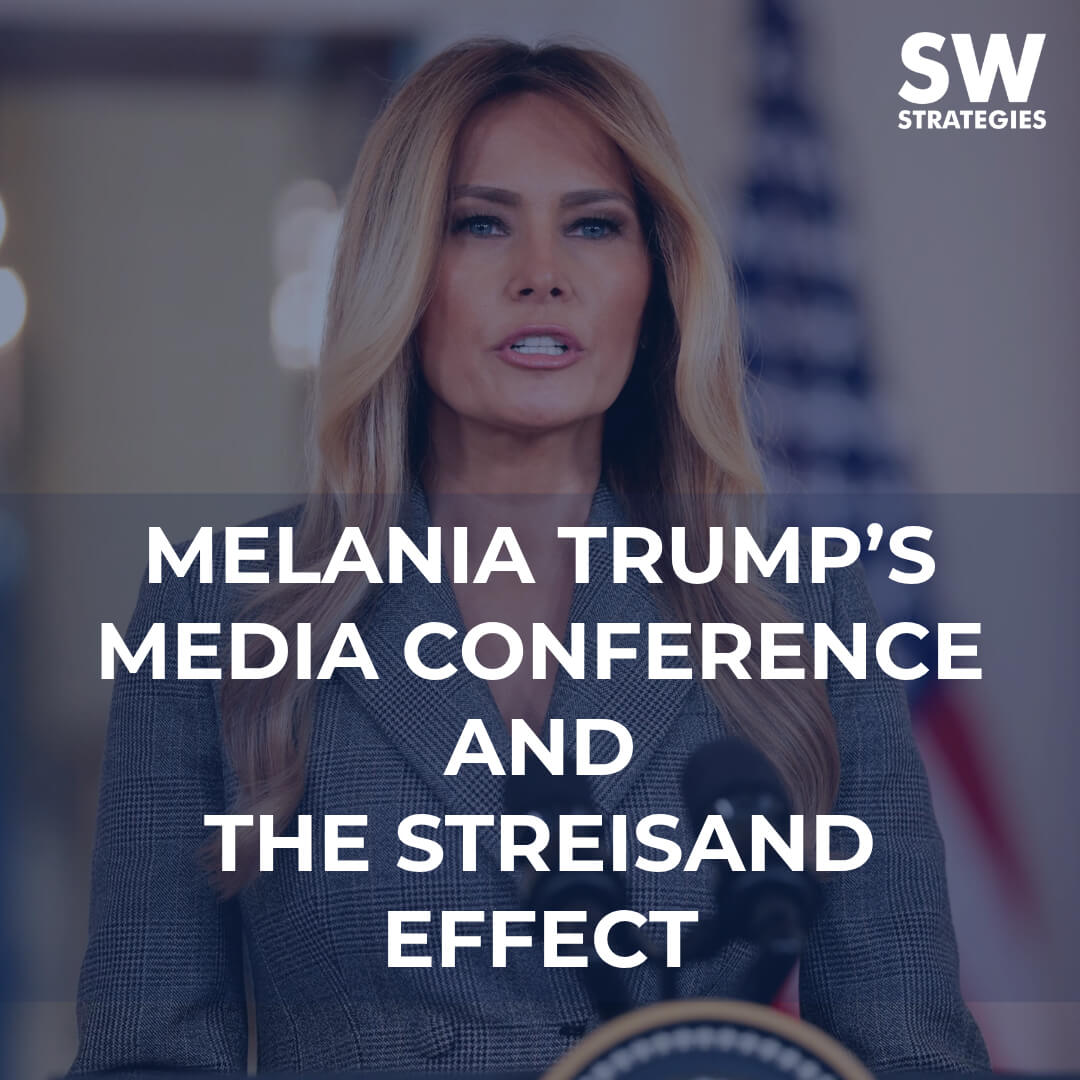
On 9 April, the First Lady of the United States (FLOTUS) Melania Trump had a media conference at the White House, reading a statement which aimed to draw a line between her and any alleged links to sex offender Jeffrey Epstein.
The impact of that media conference has been significant and offers a case study from a political communications perspective.
There are many questions which have been raised over her unusually timed media conference, at a time when the United States is still in conflict with Iran.
If the administration’s intent was to take the Epstein files out of the news cycle with the attacks on Iran, FLOTUS’ media conference brought the matter right back into the news bulletins.
In fact, her media conference dominated the news cycle even as US and Iran headed into peace talks in Islamabad over the weekend.
WHAT WAS FLOTUS’ INTENT?
Was it a “Pre-buttal”?
From a political communications perspective, it appeared that FLOTUS was issuing what polcomms practitioners would refer to as a “pre-buttal”.
We all know what is a rebuttal, but a pre-buttal?
It is an act of trying to get ahead of a story or a narrative which may be developing or in anticipation of information which may surface, which allows a certain narrative to spin out of control
“I [have] never been friends with Epstein. I am not Epstein’s victim. Epstein did not introduce me to Donald Trump.”
The Streisand Effect
If FLOTUS was trying to inform the public that they should not be reading anything online or listening to rumours circulate about her, the impact was the opposite.
People actually began to hunt for any information just out of curiosity, or to try and get to the root of what was being said such that it warranted a media statement at a time when the administration may have been trying to get any stories and mentions of the Epstein files away from the news pages.
This is called the Streisand Effect, which is named after singer and actress Barbra Streisand.
“I had never met Epstein and had no knowledge of his criminal undertakings. Numerous fake images and statements about Epstein and me have been calculating [sic] on social media for years now. Be cautious about what you believe.”
Narrative Fragmentation
From an establishment perspective, the media conference only created chaos from a communications standpoint.
With the conflict in the Middle East still raging, and with peace talks having been scheduled to take place in Islamabad over the weekend, the timing could not have come at a worse time for the Trump administration.
Instead of having media outlets focus on what was at stake during the peace talks, the media now had additional fodder to report on, and for members of the public to suggest that the administration had lost the communications plot and was not in control of its messaging.
Reports also indicated that the President of the United States was not aware that she was intending to call a media conference, which also would have created internal friction, which is not the kind of messaging discipline which any administration would have been proud of.
Message Inconsistency and Backlash
There was messaging inconsistency about her relationship with Epstein and with media outlets and social media commentators ripping to shreds whatever had been released through her statement.
Did she or did she not know Epstein, and if yes, how deep were her ties with him?
Was she trying to get ahead of something explosive?
CONCLUSION
From a strategic communications standpoint, FLOTUS’ media conference is best understood as a high-risk, low-control intervention that was intended to help her assert a clear denial of her relationship with Epstein, and to help position her as a vocal supporter of victims rather than being silent on the matter. She could have also been trying to do her part to get the various institutions involved in bringing attention to the victims’ plight.
However, what the media conference ended up doing was to reignite and amplify the Epstein matter with new levels of scrutiny and contradictions.
This was made worse by fragmented messaging and without a clear objective, at a time when focus and attention were on a war in the Middle East which the United States was involved in.

Leave a Reply