Malaysia’s Next PM? KJ vs Tengku Zafrul
The Context
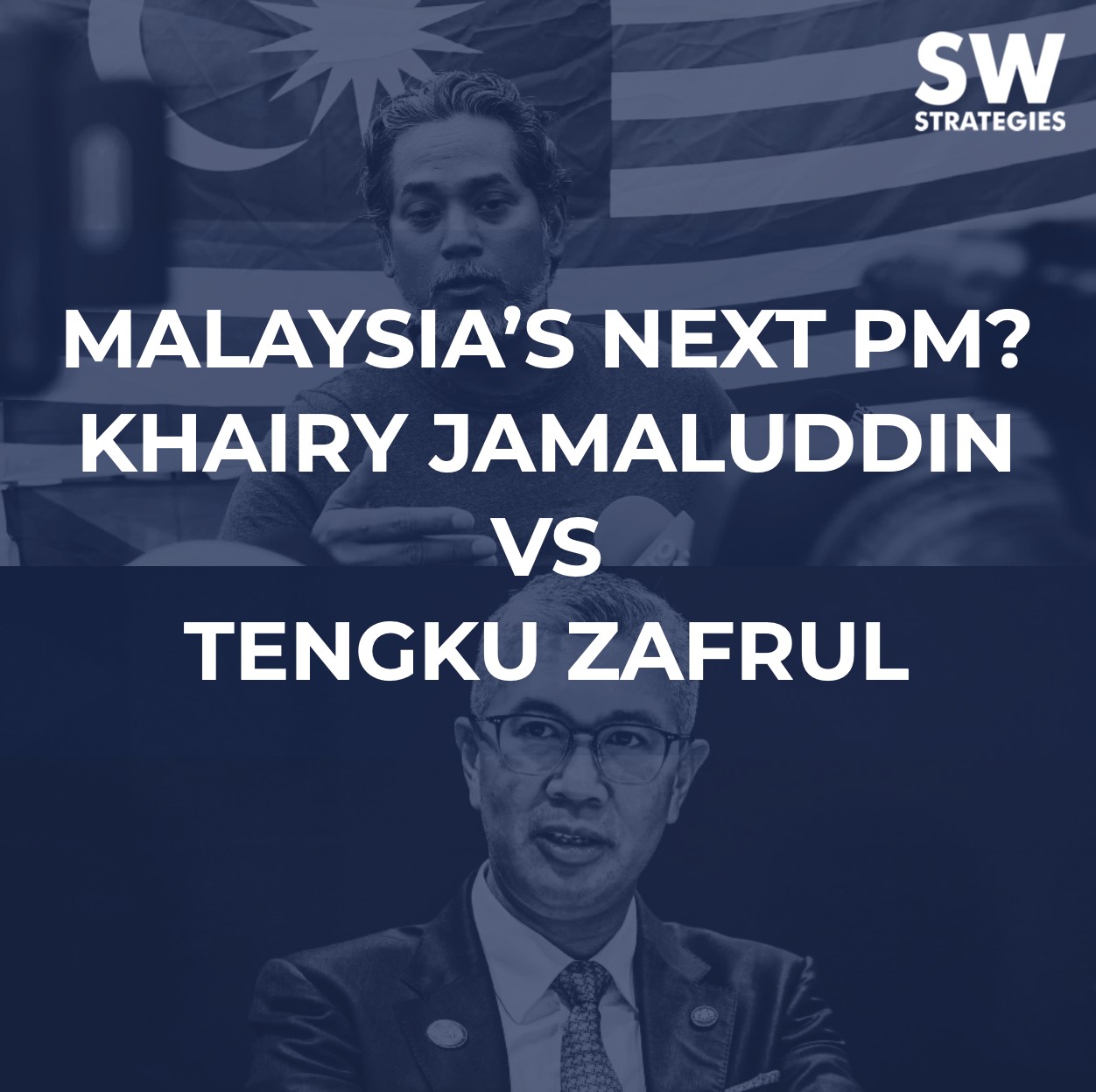
Malaysia’s political landscape is increasingly centring on a new generation of leaders, with Khairy Jamaluddin and Tengku Zafrul emerging as two of the most prominent names.
Both represent what the system is now looking for, including global credibility, cross-demographic appeal and the ability to communicate across divides.
However, neither is structurally ready to take on the top job.
The Core Question
This is no longer about popularity.
The real question is who can convert brand into power, and power into mandate.
The Case for KJ
Khairy Jamaluddin remains one of the most recognisable political figures of his generation.
He has openly declared his ambitions to become Prime Minister, retains strong appeal among urban and younger voters, and has returned to UMNO as a bridge between old and new.
Even outside formal office, he continues to command relevance and visibility.
The Constraints for KJ
His path, however, is structurally limited.
He currently holds no parliamentary seat, must reintegrate into UMNO cautiously, and cannot openly challenge existing leadership.
His trajectory depends on patience and his ability to navigate internal party dynamics over time.
The Case for Zafrul
Tengku Zafrul’s positioning is being built from within the system.
As Senior Political Advisor to Anwar Ibrahim, and with experience serving under Muhyiddin Yassin and Ismail Sabri Yaakob, he brings a rare cross-coalition credibility.
He is widely seen as a stabilising and institutionally trusted figure with close proximity to the centre of power.
The Constraints for Zafrul
Despite this, his structural gaps remain significant.
He has never won an election, lacks a strong grassroots base, and his current role is advisory rather than executive.
While he has proximity to power, he does not yet command a mandate.
The Brand Difference
The contrast between the two is clear.
Khairy Jamaluddin embodies a thinking, outspoken and media-savvy politician, with a brand built on independence and public engagement.
Tengku Zafrul, by contrast, represents a technocratic, measured and institution-driven figure, grounded in governance experience and credibility.
Both are shaping distinct leadership identities in different ways.
The Challenge for Both
Public perception remains mixed.
While some view both figures as credible future leaders, others question their authenticity or perceive elements of performative positioning.
Managing this perception will be critical to their long-term viability.
What Decides This?
Ultimately, the real battleground is not branding.
It is party machinery, electoral success and political timing.
The outcome of GE16 is likely to be decisive in determining who is able to convert potential into actual leadership.
Final Take
Both Khairy Jamaluddin and Tengku Zafrul are preparing for a Malaysia that rewards leaders who can bridge generational, ideological and political divides.
For now, neither is at Putrajaya’s doorstep.
They are building toward it on different paths, each with its own risks and constraints.

Leave a Reply